

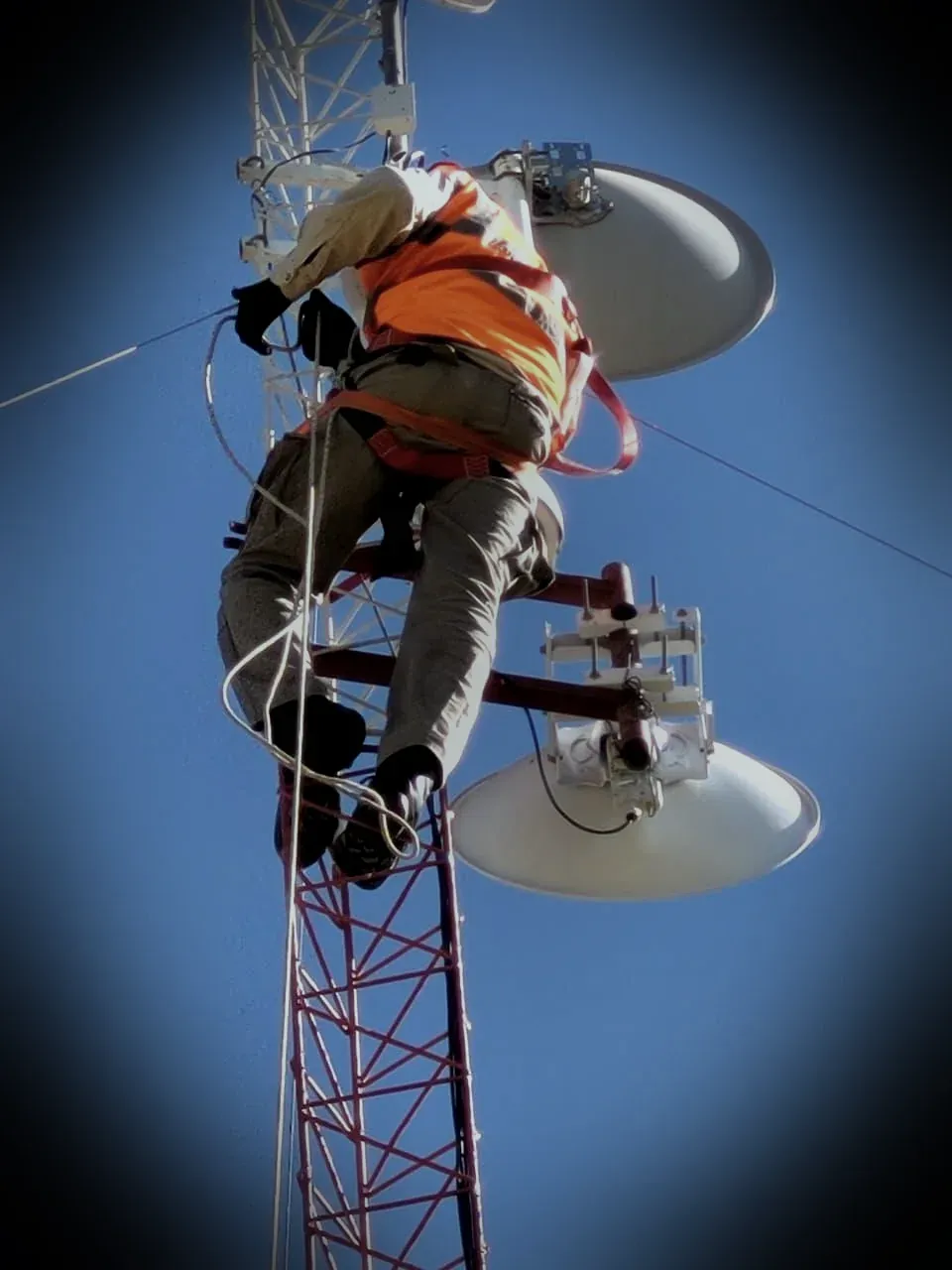
ADSS · aerial network
ADSS cable stringing and installation
We assess ADSS installation considering spans, loading, electric field, sag, tension, hardware, crossings, reserves, splicing and optical acceptance. Engineering and execution are confirmed against project resources and requirements.
Scope, resources, qualifications and schedule are confirmed following technical review of the project.
Scope inputs
ADSS removes metal, not mechanical engineering.
Selection must combine span, wind/ice load, temperature, diameter, weight, strength, sag, tension, hardware and electric-field exposure. The same fibre count may require different constructions for different lines and environments.
Selection and compatibility
Review of cable, jacket, strength, design span, environment and associated hardware.
- Maximum span and ruling span
- Electric field and tracking
- Mechanical load and temperature
Aerial installation
Survey, protection, stringing, tension control, suspension/dead-end hardware and reserves.
- Crossings and obstacles
- Minimum bend radii
- Installation sag and tension
Optical close-out
Closures, branches, fusion, ODFs, labelling, OTDR and documentation.
- Fibre matrix
- Node reserves
- Drawings and dossier
Method
ADSS delivery structure
Survey
Structures, spans, heights, crossings, access, voltage and environment.
Design and selection
Cable, jacket, hardware, sag, tension, reserves and dead-end points.
Installation plan
Drums, fronts, protections, plant, communications and work windows.
Installation
Controlled stringing, suspension, dead-ends, dampers and routing.
Splicing
Closures, downleads, fusion, branches and continuity matrix.
Acceptance
Mechanical inspection, OTDR, redlines and final dossier.
Scope inputs
Data that defines an ADSS solution
These inputs turn assumptions into controlled decisions.
- Line type, voltage and structure geometry
- Proposed cable position relative to conductors
- Span table, elevations and angles
- Wind, ice/snow, temperature and altitude
- Fibre count and type
- Maximum span and load cases
- Jacket and tracking-resistance requirement
- Dead-end, branch and splice points
- Crossings, clearances, permits and access
- Optical and documentary acceptance criteria
Commercial engineering
Risks that must be closed
Underspecified cable
Selecting ADSS by fibre count alone can fail on span, tension, tracking or environment.
Unmatched hardware
Suspension and dead-end sets must match actual cable diameter, load and construction.
Uncontrolled sag
It affects clearances, crossings, loads and network safety.
No planned reserves
Changes, splices and repairs require properly located and protected slack.
Next step
Deliverables to agree for acceptance
The scope must define which records, measurements and documents apply to the contracted package.
- Selection basis and assumptions
- Stringing and drum distribution plan
- Hardware, closure and consumable BOM
- Sag, tension and installation records
- Fibre matrix and OTDR traces
- As-built drawings and dossier
FAQ
Questions that change scope, price or acceptance.
Can ADSS be installed on any line?
No. Geometry, electric field, span, loading, jacket, tracking, hardware and environmental conditions must be verified.
What is the difference between suspension and dead-end hardware?
Suspension supports the cable on tangent structures within angle/load limits; dead-ends take longitudinal force at terminals, angles or defined sections.
Can supply and hardware be included?
The package may include full supply, installation of client-supplied material or a combination. Compatibility is validated before procurement and installation release.
How is the network accepted?
Through installation inspection, identification, fibre matrix, splicing, OTDR testing and documentation to the agreed criteria.
Next step
Share the line and the critical span.
With voltage, geometry, span table, environment, fibre count and network points, we can identify what is missing to select and quote ADSS.